
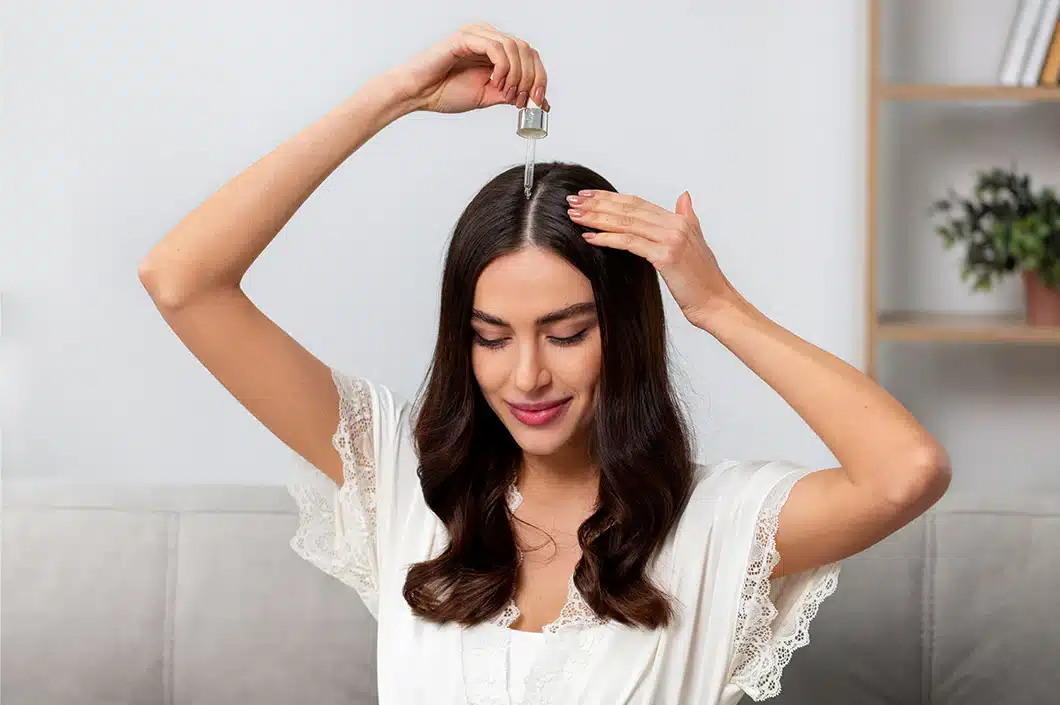

My Story: From Almost Bald to Healthy Hair
I was almost bald.
Not the dramatic “my hair is thinning a bit” kind of almost bald,I mean I was literally losing so much hair that I could see my scalp when I pulled my hair into a ponytail. And I was crying myself to
sleep almost every single night.
This happened during my teenage years when I was drowning in exam stress, comparing myself to other girls, obsessing over the tanning on my skin, and completely convinced that I was ugly and would never
have beautiful hair. The stress triggered a hair loss spiral so intense that I’d find clumps of hair in my brush and wake up to strands all over my pillow.
People started making fun of me. I felt hopeless. Desperate.
But here’s the thing I discovered over the next two years: my problem was never my genetics. My family has beautiful, naturally shiny hair. The real problem was that I didn’t understand my own hair type, I was
using the completely wrong oils for my hair, and absolutely nobody mentioned that nutritional deficiencies might be behind my hair loss.
Most importantly? Oils alone weren’t going to save my hair.
If you’re searching for natural remedies to prevent shedding or strengthen weakened hair, this guide covers everything from castor oil for scalp health to the nutritional deficiencies and thinning hair connections that nobody talks about.
Today, I want to share exactly what brought my hair back. Not just which oils actually work (spoiler: argan, jojoba, rosemary, and castor, but NOT in the way you think), but why most people fail at growing their
hair, how nutrition plays a bigger role than any beauty guru mentions,the cultural remedies my asian family has trusted for generations, and the honest, realistic timeline of how long this actually takes.
This isn’t a quick-fix guide. This is a real story of how I went from almost bald and desperate to hair I’m genuinely proud of. And how you can regrow hair too.
Part 1: Why I Lost My Hair (And Why You Might Too)
When my hair started falling out, I thought it was my genetics. But my parents and grandparents all have thick, healthy hair. So that couldn’t be it.
Then I blamed the tanning. Then I blamed stress (okay, stress WAS a big part). But what I didn’t realize was that I was making it exponentially worse through how I was treating my hair.
Here’s what was actually happening:
Mistake #1: I Used Heavy Oils on Low Porosity Hair
At 18, I didn’t even know what “low porosity hair” meant. I just knew my hair felt dry sometimes and oily other times, and I thought that meant I needed heavy oils.
So I used mustard oil. My family used it, so I thought it would help with hair loss.
It made everything worse.
Heavy oils like mustard oil, thick coconut oil applications, and mineral oils literally coated my strands instead of penetrating. Because my hair has tight cuticles, it couldn’t absorb that heavy moisture, it just sat on top, making everything greasy, weighed down, and unhealthy. My scalp? Already oily, now suffocating under product buildup.
I didn’t understand that tight-cuticle hair needs lightweight options, not thick, occlusive products that coat the shaft.
This is the biggest mistake I see: people think more product = better results. But if you have tight cuticles, heavy oils actually prevent the results you want.
Mistake #2: Hard Water + Wrong Products
I was also washing in hard water (common in my region and other regions), and mineral deposits were accumulating on my strands, making them brittle and prone to snapping.
Mistake #3: The Nutritional Deficiency Nobody Talked About
This is the part that changed everything.
While I was trying different oils and searching for best oils for hair growth, I also got blood work done for general health. My doctor found two major deficiencies:
- B12 deficiency (which directly affects hair growth and cell division)
- Iron deficiency anemia (which literally stops your hair follicles from thriving)
When I started taking supplements for these deficiencies and fixing the nutritional gaps, my hair started responding better to everything else I was doing the oils, the treatments, all of it.
This is something I almost never see mentioned in hair care articles. Everyone focuses on external treatments, but if your body doesn’t have the nutrients to build healthy hair, no oil in the world will fix it
completely.
The connection between nutritional deficiencies and hair loss is real, and it’s something your doctor should check.
Part 2: Understanding Your Hair Type Changes Everything
After about a year of trial and error (and a lot of frustration), I finally discovered something that changed my life: I have low porosity hair. (If you’re not sure about your hair type, read my complete low porosity hair guide.
What does that mean? This hair type has tightly packed cuticles that resist moisture. For me, heavy products felt like plastic wrap, nothing penetrated, everything just built up.
When I realized I had low porosity hair, everything clicked.
What Low Porosity Hair Needs
Low porosity hair does best with:
Lightweight products that penetrate (jojoba, argan, diluted rosemary)
Moisture-based treatments (water, leave-in conditioners, hydrating masks)
Heat or steam to improve penetration.
Clarifying treatments to remove buildup (rice water works great!)
What doesn’t work:
- Heavy products like mustard or thick coconut applications
- Thick butters and creams
- Products with silicones that coat
- Mineral buildup from hard water
The key: choose light, penetrating ingredients instead of heavy, occlusive ones.
The best oils for low porosity hair are light and penetrating, not heavy and occlusive.
Once I shifted to light oils and the right approach for my low porosity hair type, everything changed. My shedding decreased, my scalp became healthier, and my hair started growing again.
Part 3: The 4 Lightweight Oils That Actually Work (Ranked)
After two years testing castor, jojoba, rosemary, and argan varieties, I’ve found that mixing lightweight options works best for my hair type. Different products offer different benefits, so combining them gives better results.
Best Oil Combinations (What Actually Works)
For low porosity hair specifically, the best oils for hair growth are not single oils but combinations:
- Castor oil + jojoba oil (for hair loss prevention and scalp stimulation)
- Rosemary oil + argan oil (for light nourishment and growth)
- Jojoba oil + argan oil (for daily lightweight use)
Here’s what I learned about each:
1. Argan Oil: The Lightweight Nourisher
Why it works: Argan oil is lighter than expected and penetrates well without heavy residue. It’s rich in vitamin E and essential fatty acids, which strengthen strands from within and support new growth.
What I use it for:
General scalp and hair health. I mix a few drops of argan oil with rose water to create a lightweight conditioning spray that doesn’t weigh down my low porosity hair.
How I apply it:
A few drops (literally 5-7 drops for my whole head) warmed slightly between my palms, focusing on the mid-lengths and ends. I massage a tiny bit into my scalp but I’m careful not to overdo it
because my scalp is already oily.
Best for:
All hair types, especially low porosity and oily scalps
Where to buy:
Organic Argan Oil for Hair, look for cold-pressed, pure argan oil with no additives.
2. Jojoba Oil: The Scalp Balancer for Hair Loss
Why it’s special: Why it’s special: Jojoba mimics your scalp’s natural sebum. It signals your scalp that
it has enough oil, which helps regulate production. This means less greasy roots over time, crucial if you’re managing an oily scalp.
What I use it for:
Scalp health and regulation. This ingredient works because it keeps everything balanced and promotes a healthy environment.
How I apply it:
A small amount (like 3-4 drops) massaged directly into my scalp before bed. I let it sit overnight and wash it out in the morning. When I do this consistently 2-3 times per week, my scalp stays balanced and less oily. For more ways to use jojoba for skin benefits, check out my jojoba oil for skin guide.
Best for:
Oily scalps, low porosity hair, anyone trying to regulatenatural oils
Where to buy:
Pure Jojoba Oil for Hair make sure it’s 100% pure jojoba oil, nothing else.
3. Castor Oil: The Growth Stimulator for Hair Regrowth
Why it works:
Castor oil is rich in ricinoleic acid, which improvesblood circulation to the scalp. Better blood flow = better nutrient delivery to your hair follicles = healthier hair growth.
Important note:
Castor oil is thicker than argan and jojoba. For low porosity hair, you can’t use it alone. You HAVE to mix it with a lighter carrier oil. This is crucial for castor oil hair loss treatment to work.
What I do:
I mix castor oil (1 part) with jojoba oil (2-3 parts) to create a blend that’s potent but not too heavy. When I use this combination consistently, I notice less shedding and more visible new growth.
How I apply it:
I warm the mixture slightly (warm oil penetrates better!), apply it to my scalp, massage for 5-10 minutes to stimulate blood flow, and leave it for 30 minutes to 2 hours before washing it out with a clarifying shampoo.
Best for:
Hair loss prevention, stimulating growth, increasing circulation
Where to buy:
Organic Castor Oil for Hair, get the castor oil meant for hair, not the generic kind. Make sure it’s pure and unrefined.
4. Rosemary Oil: The Hair Growth Secret Nobody Uses Consistently
The science:
Multiple studies show that rosemary oil is nearly as effective as minoxidil (the FDA-approved hair loss treatment) when used consistently. Rosemary oil for hair growth works by stimulating the scalp,
improving circulation, and has been shown to reduce hair shedding significantly.
Important:
Rosemary oil is an essential oil and you CANNOT apply it directly to your scalp. You must dilute it in a carrier oil first. This is critical.
What I do:
I mix 5-7 drops of rosemary essential oil with 2 tablespoons of jojoba oil, then massage it into my scalp 2-3 times per week. The difference in hair shedding is noticeable within a few weeks of consistent use.
How to apply:
Warm the mixture, apply to scalp, massage well for 5-10 minutes, leave for at least 30 minutes (overnight is even better), then wash out with a gentle clarifying shampoo.
Best for:
Hair loss treatment, scalp stimulation, reducing shedding
Where to buy:
Rosemary Essential Oil (Therapeutic Grade), get a pure, therapeutic-grade essential oil. Jojoba Oil Carrier to dilute it with.
What I Tried That FAILED (And Why)
Let me be completely honest about what didn’t work:
Mustard oil: Made my hair heavier and my scalp greasier. The buildup was awful. For low porosity hair, it’s too occlusive and doesn’t work or hair loss prevention.
Coconut oil (in thick applications): Coconut oil is amazing for some hair types, but on my low porosity hair, it just coated everything and didn’t penetrate. I found that a light mist of diluted coconut oil occasionally works, but thick coconut oil treatments? No. This was a major mistake.
Mixing ALL the oils together: I thought more oil = better results for hair loss. It didn’t. Consistency and the RIGHT oils matter way more than quantity.
Part 4: The Nutrition Secret (The Part Most Hair Loss Articles Skip)
Here’s what changed my hair game: I started treating hair loss like a health problem, not just a beauty problem.
This is why, my complete hair care masterclass, includes nutrition sections.
When I got blood work done, my doctor found two major nutritional deficiencies that were directly contributing to my hair loss:
B12 Deficiency and Hair Loss
B12 is crucial for cell division and DNA synthesis , basically, your body can’t build new, healthy cells (including hair cells) without enough B12. When you’re B12 deficient, your hair growth slows down and shedding increases dramatically.
Symptoms I had:
- Hair loss and thinning
- Fatigue
- Brain fog
- Pale skin
What I did: Started B12 supplements (as recommended by my doctor) and within 2-3 months, my energy improved AND my hair shedding decreased noticeably.
The connection between B12 deficiency hair loss is real, and it’s something many people overlook when looking for oils to regrow hair.
Where to get it: B12 Supplement (Methylcobalamin), get the methylcobalamin form, not cyanocobalamin. It’s more bioavailable.
Iron Deficiency Anemia and Hair Loss
Iron is essential for carrying oxygen to your hair follicles. Without enough iron, your follicles can’t produce strong, healthy hair. Iron deficiency anemia is actually one of the most common causes of hair loss
that nobody talks about.
Symptoms I had:
- Severe hair loss
- Extreme fatigue
- Shortness of breath
- Pale complexion
What I did: Started iron supplements (as recommended by my doctor) and combined with B12, this made a MASSIVE difference. My shedding went from 50+ hairs per wash to maybe 20-30 within a few months of fixing this nutritional deficiency.
The Real Hair Loss Causes Nobody Mentions:
Before you buy another hair growth oil, check for these nutritional deficiencies that cause hair loss:
- B12 deficiency hair loss
- Iron deficiency anemia and hair loss
- Zinc deficiency
- Vitamin D deficiency
- Biotin deficiency
Get blood work done. Seriously.
Where to get it: Iron Supplement for Hair Loss look for ferrous sulfate or iron bisglycinate. Take it with vitamin C for better absorption.
The Bigger Picture: Nutrition and Hair Health
Here’s what I learned from studying Public Health and Nutrition: your body is one system. Healthy body inside = healthy hair, skin, and nails outside.
When I fixed my nutritional deficiencies for hair loss:
- My hair responded better to oils
- My scalp became healthier
- My hair grew faster and stronger
- My skin cleared up too
Nutritional deficiencies and hair loss are directly connected. You can’t just use oils to regrow hair if your body doesn’t have the building blocks it needs.
If you’re experiencing hair loss, please get blood work done. Ask your doctor to check:
- B12 levels (especially important!)
- Iron levels (ferritin, not just hemoglobin)
- Thyroid function (TSH, T3, T4)
- Vitamin D
- Biotin
Sometimes the best “hair oil” is actually a multivitamin or supplement.
Part 5: The Cultural Remedies That Actually Work
While I was using oils and supplements, I also went back to the remedies my family in Asia has used for generations. And honestly? They work.
Remedy #1: Yogurt + Egg + Oil Mask for Hair Growth
This is the remedy my mom taught me. It’s designed to add protein and moisture to hair, which supports healthy regrowth.
Recipe:
- 1 cup plain yogurt
- 1 egg
- 1 tablespoon argan or jojoba oil
- (Optional) 1 tablespoon honey
How to make: Mix everything together until it’s a smooth paste.
How to apply:
Apply to your scalp first, massage for 2-3 minutes. Then apply to the length of your hair. Leave for 20-30 minutes (or up to an hour). Rinse with cool water and shampoo
Why it works:
Yogurt has lactic acid that clarifies buildup Egg is protein-rich (hair is made of protein!)
Oil nourishes and conditions
How often: Once a week. I do this every Sunday as part of my routine.
Where to buy supplies: Plain Organic Yogur,
Organic Eggs
Remedy #2: Cornflour as a Soothing Conditioner
My nani (grandmother) taught me this one. It sounds weird, but it genuinely works for frizz and dryness.
Recipe:
Add 1-2 tablespoons of cornflour to your regular conditioner
Mix well until smooth
How to apply:
Apply to hair after shampooing
Leave for 5-10 minutes
Rinse thoroughly
Why it works: Cornflour is soothing and absorbs excess moisture while smoothing the hair cuticle. It reduces frizz and adds a subtle smoothness to low porosity hair.
How often: Every time you wash (mix it in your regular conditioner)
Where to buy: Cornflour/Corn Starch
Remedy #3: Rice Water Rinse for Hair Health
Rice water is huge in East Asian beauty, but it’s also been used in South Asian hair care for centuries. It’s full of amino acids and vitamins that strengthen hair and support hair regrowth.
How to make rice water:
- Take 1 cup uncooked rice
- Rinse it thoroughly
- Add 2-3 cups of water
- Let it soak for 30 minutes
- Strain the water (this is your rice water)
- Store in the fridge for up to 1 week
How to use:
After shampooing, pour the rice water through your hair as a final rinse
Let it sit for 5 minutes
Rinse with cool water
How often: 2-3 times per week. Rice water also works great for skin! Learn how to use rice water for glowing skin.
Why it works: Rice water clarifies buildup (especially helpful with hard water), strengthens hair, and adds shine. It’s one of the best natural remedies for hair loss that actually works.
Where to buy rice: Organic Rice
Remedy #4: Rose Water for Hydration and Scalp Health
Rose water is cooling, hydrating, and amazing for scalp health. My family has used this for generations.
How to use:
- Mix 1 part rose water with 2 parts water
- Use as a leave-in conditioner spray
- Spray on damp hair after washing
- You can also add it to your oil blends for lighter application
Why it works: Rose water hydrates without being heavy. It also has anti-inflammatory properties that soothe the scalp and reduce irritation that can worsen hair loss.
Bonus: I mix rose water + glycerin (1 tablespoon each) + a drop of argan oil as my leave-in conditioner. This blend changed my hair game completely and supports healthy regrowth. (Rose water is also amazing for skin, see how to use it in my dry skin moisturizer guide.
Where to buy: Pure Rose Water (not fragrance),
Vegetable Glycerin
Part 6: The Real Timeline (Not the Fake “Results in 2 Weeks” Thing)
I want to be completely honest about timing because I see so many articles promising instant results for hair loss remedies. That’s not realistic.
Year 1: Confusion and Experimentation
Months 1-6: I was still using the wrong products, still didn’t know about low porosity hair, still thinking my genetics were bad. Hair loss continued unabated.
Months 6-12: I started researching seriously, got blood work done, discovered my nutritional deficiencies, started supplements. Still losing hair but starting to understand why. This is when I realized I needed to
look at oils to regrow hair strategically, not just randomly.
Year 2: Turning Point
Months 1-3 (of year 2): Started taking B12 and iron supplements. Started using only light oils instead of heavy ones. Still seeing shedding but less dramatic.
Months 4-6: THIS is when I started seeing real, visible results:
- Hair shedding went from 50+ strands per wash to 20-30.
- New baby hairs started appearing on my hairline
- Hair felt softer and shinier
- Scalp felt healthier
- First signs of actual hair growth visible
Months 7-12: Continued improvement. Hair growth became noticeable. I could see length and thickness returning. The regrow hair timeline started showing real progress.
Now: Honest Assessment
My hair is SO much better than it was. I have visible new growth, less shedding, shinier strands, and a healthier scalp. But I’m not going to pretend I have perfectly thick, voluminous hair, I’m still working on that consistency.
Real Timeline for Hair Regrowth:
- To see first results: 4-6 months of consistency
- To see dramatic results: 8-12 months
- To fully transform hair: 18-24 months
The consistency part is KEY. I use oils 2-3 times per week, take my supplements daily, do masks once a week. I don’t skip for months and then expect it to work.
Part 7: How to Actually Use These Oils (So They Work)
Most people use hair oils wrong. Here’s how to actually do it so you can regrow hair:
Step 1: Warm the Oil
Cold oil doesn’t penetrate well. Warm oil does.
How: Pour your oil blend into a bowl, place the bowl in warm water for 2-3 minutes, or warm it slightly between your palms. It should be warm to the touch, not hot.
Step 2: Apply to Scalp
Start at your scalp, not your hair length. Use about 1-2 teaspoons of oil (people use way too much!).
How to apply: Part your hair into 4-5 sections. Apply a small amount to each section, focusing on the scalp.
Step 3: Massage for 5-10 Minutes
This is crucial. Massage stimulates blood flow, which helps hair growth and supports regrowth.
How: Use your fingertips (not nails!), massage in circular motions. This feels amazing and actually works.
Step 4: Let It Sit
Leave the oil on your hair for at least 30 minutes. Ideally, overnight.
Why: It takes time for the oil to penetrate and do its thing.
Step 5: Wash Out Thoroughly
This is important. Oil buildup is real and can actually prevent hair regrowth.
How: Use a clarifying or sulfate-free shampoo. You might need two rounds of shampooing to get all the oil out. That’s normal.
Pro Tips:
Use less oil than you think you need. Most people use way too much, which leads to buildup instead of hair growth.
For low porosity hair, heat helps oils penetrate. Sit under a warm towel or blow dryer while the oil sits in.
Mix your oils. One oil alone might not work. I mix 2-3 light oils together.
Be consistent. 2-3 times per week, every week. Not randomly when you remember. Consistency is the real secret.
Part 8: What NOT to Do (Things That Made It Worse)
Don’t Use Heavy Oils on Low Porosity Hair
This was my biggest mistake. Heavy oils = buildup = worse hair and can prevent regrowth.
Don’t Skip the Nutrition
Oils are only part of the solution. If your body doesn’t have the nutrients, your hair won’t grow. Get blood work done for nutritional deficiencies and hair loss.
Don’t Expect Instant Results
Stop looking for the “miracle oil that works in 2 weeks.” Hair grows about 0.5 inches per month, and that’s if everything is optimal. Real hair regrowth takes time.
Don’t Be Inconsistent
Using oil intensely for 2 weeks, then forgetting about it for 2 months = zero results. Consistency matters way more than the “perfect” oil.
Don’t Apply Oil to Wet Hair Without a Carrier
Essential oils (like rosemary) need to be diluted in a carrier oil. Never apply essential oils directly.
Don’t Use Very Hot Water to Rinse
Hot water can damage hair and strip it of natural oils. Use lukewarm or cool water for rinsing.
Part 9: Tools That Help with Hair Regrowth
You don’t need expensive stuff, but these tools make a difference:
Scalp Massager Brush: Scalp Massage Brush, makes the massage step way easier and more effective.
Microfiber Hair Towel: Microfiber Hair Towel, regular towels create friction and breakage. Microfiber is gentler.
Wide-Tooth Comb: Don’t use a regular brush on wet hair. A wide-tooth comb prevents breakage that can interfere with regrowth.
The Takeaway: Your Hair Journey Starts with Understanding
Not all hair is the same. What worked for me (light oils, nutrition,cultural remedies) might look different for you. But the principles for hair regrowth are the same:
- Understand your hair type (low porosity vs high porosity makes a HUGE difference!)
- Use the right products for YOUR hair
- Fix nutritional deficiencies (get blood work done!)
- Be consistent (2-3 times per week, every week)
- Have realistic expectations (real results take 6+ months)
- Focus on scalp and overall health, not just external treatments
If you’re looking for best oils for hair loss, remember: it’s not just about the oils. It’s about understanding your hair, your nutrition, and being patient with the process.
My Hair Now
I’m not going to pretend I have perfect, ultra-thick hair. I’m still working on consistency and thickness. But I have healthy hair. Hair I’m proud of. Hair that grows. Hair that doesn’t make me cry.
And honestly? That’s everything to 18-year-old me who thought she’d be bald forever.
If I can go from almost bald to healthy hair with oils, nutrition, and the right approach, you can too. It just takes understanding, patience, the right tools, and consistency.
Your hair is waiting. You’ve got this.
FAQ: Common Questions About Hair Loss Oils and Growth
Q: Can I use just one oil for hair loss and regrowth?
A: You can, but mixing 2-3 light oils tends to work better. Each oil offers different benefits. For example, mix castor oil with jojoba for potency, or rosemary oil with argan for lightweight nourishment.
Q: How long until I see results with oils to regrow hair?
A: First noticeable results in 4-6 months of consistency. Real transformation in 12-18 months. Hair growth is slow, so patience is key.
Q: What’s the best oil for hair loss?
A: It depends on your hair type. For low porosity hair, I recommend light oils like jojoba and argan. For high porosity hair, castor oil works better. For hair loss specifically, rosemary oil for hair growth is
scientifically proven.
Q: My scalp is oily. Can I still use oils for hair loss?
A: Yes! Use light oils (jojoba, argan, rosemary mixed with jojoba) in small amounts. Focus on the scalp to balance it, not make it more oily. Jojoba oil actually helps regulate sebum production.
Q: Should I get blood work done for hair loss?
A: If you’re experiencing significant hair loss, absolutely yes. Talk to your doctor about getting tested for B12 deficiency, iron deficiency anemia, thyroid issues, and vitamin D.
Q: Can I use these oils if my hair is not low porosity?
A: Yes, these oils are generally good for most hair types. But you might need thicker oils if you have high porosity hair. Start with the light oils and adjust based on how your hair responds.
Q: Is rosemary oil or castor oil better for hair loss?
A: Both work, but for different reasons. Rosemary oil for hair growth stimulates the scalp and improves circulation. Castor oil for hair loss improves blood flow to follicles. Use them together for best results.
Q: Can oil alone regrow hair after nutritional deficiency?
A: No. You need to fix the deficiency first (B12, iron, etc.) then use oils to support hair growth. This is the critical step most people miss.
Q: How do nutritional deficiencies cause hair loss?
A: B12 is needed for cell division, iron carries oxygen to hair follicles, and other nutrients support hair health. Without them, your hair can’t grow properly even with the best oils.
Q: What if oils don’t work for me?
A: First, make sure you’re using them correctly (warm, on scalp, 2-3 times weekly, for 6+ months). Second, get blood work done, your issue might be nutritional, not external. Third, consider consulting a dermatologist if hair loss is severe.
Related Posts
 How Argan Oil Transforms Your Hair and Skin Naturally
Introduction In the world of natural beauty solutions, argan oil has emerged as a powerhouse…
-
Hair Loss in Men: What Every Guy Should Know
Introduction If you’re noticing more hair in your brush or your hairline feels like it’s…
-
How to Repair Damaged Hair Naturally: Expert Tips for Stronger, Healthier, Shiny Strands
I know how frustrating it is to look in the mirror and see limp, dry,…
- How Argan Oil Transforms Your Hair and Skin Naturally
Introduction In the world of natural beauty solutions, argan oil has emerged as a powerhouse…


[…] more hair in your brush or your hairline feels like it’s creeping backward, you’re not alone. Hair loss in men can feel unnerving, but understanding what’s going on, especially when it comes to male […]